Shanza Sami

Incoming @ Stanford. Searching for the patterns that connect society, technology, and the observable world. 

01 ABOUT

Origin: a liminal space between the Earth and the stars.

The stars have always asked humanity the same questions. Our answers have evolved — from philosophy to mathematics — but the wonder that drives them remains unchanged. There are endless "constellations" around us that shape the way we understand intelligence, nature, and our place in the world.

Beneath the same sky that inspired philosophers and scientists, I grew up in Iowa, where my mind wandered under vast horizons and fields. Some landscapes teach you how to look farther than the horizon itself.
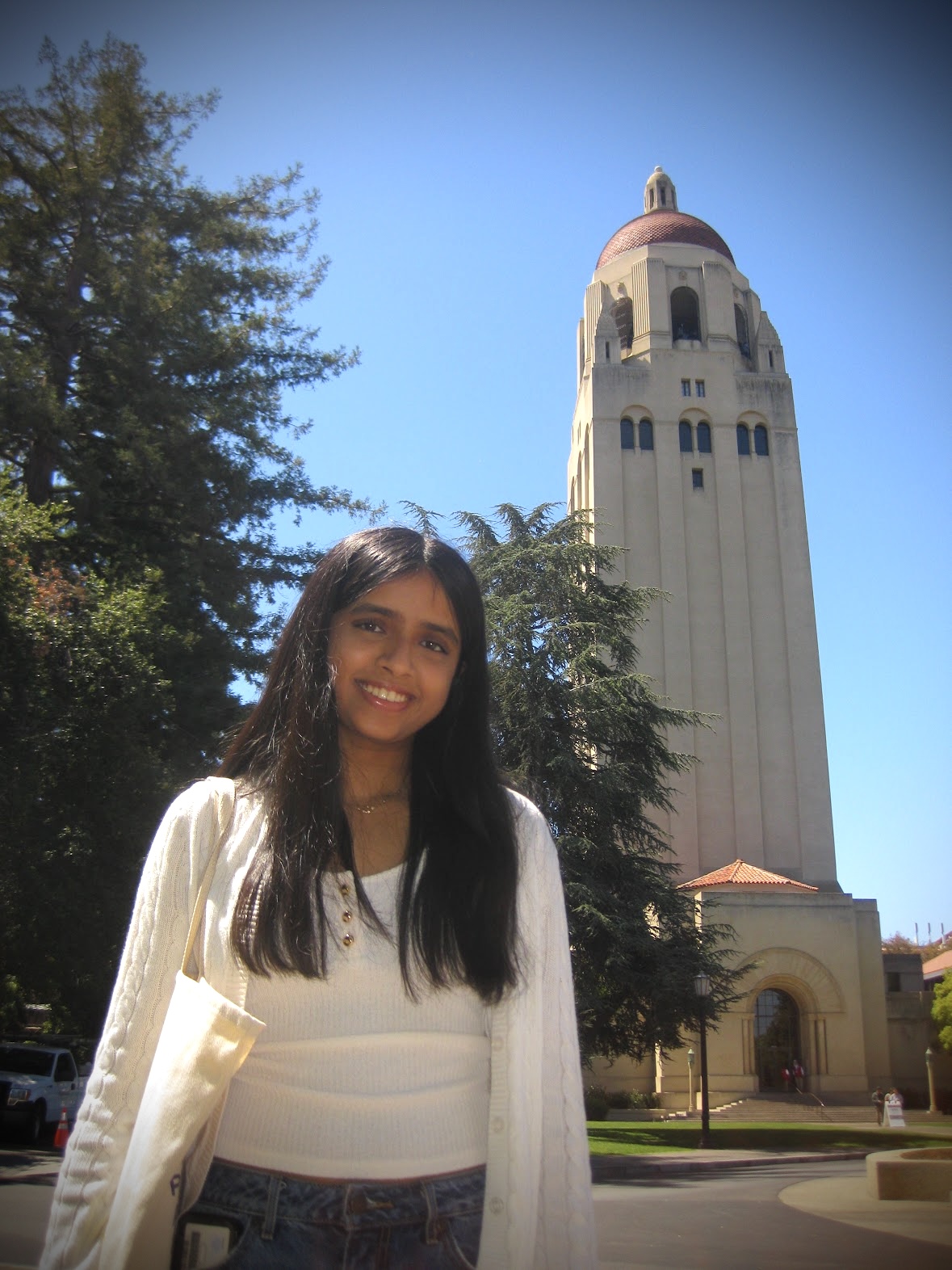
Shanza standing before Hoover Tower at Stanford
Fig. 1. Shanza at Stanford.
Standing at Stanford’s Hoover Tower — a bridge between my Iowa roots and the larger questions I hope to pursue. Hoover was a fellow Iowan whose journey reached far beyond where it began.

Curiosity has no limits.
I see Stanford as the start of a much longer trajectory: a place to study the deepest patterns that govern our world, then build technologies that help humanity navigate an increasingly complex future.
CURRENTLY   Building Chia alongside Henry Zou @ Stanford & CMU.
FIG. 1 · ORIGIN

Age 10: engineered a computer with my dad.
☆ Age 11: earned a Harvard CS certification.
Middle school: built and launched H-motor model rockets in fields; experimented with robotics and DL.

FIG. 2 · RESEARCH

→ Designed a photocatalytic emissions system
→ Conducted topological DL research on Earth systems
→ Forecasted global methane emissions using advanced satellite retrievals

FIG. 3 · EDUCATION

Graduated from West High one month ago.
Studying Symbolic Systems @ Stanford, combining CS and philosophy. 

FIG. 4 · BEYOND

Streamlining innovation to better understand and harness the natural world surrounding us. 

02 VALUES

Values: seven navigational stars.

Born along the India-Nepal border, my dad first showed me the "saat bhaiya," meaning "seven brothers" (AKA the Big Dipper). Used for celestial navigation and timekeeping under ancient Indian astronomy, this constellation once dictated time and crop harvests. 

Similarly, I leverage seven core values to guide me throughout life. 
{{ v.name }}
{{ selName }}

{{ selText }}

SELECT A STAR TO READ ITS REFLECTION

03 PROJECTS

Projects & Research: exploring complex systems.

Explore my research publications and ongoing projects below.

SYSTEM 01 · [COMPUTATIONAL FLOW ANALYSIS × MATHEMATICS] · MARCH 2026

TopoFlow

Developed a topology-driven atmospheric analysis framework that applies the Poincaré-Hopf theorem and Hairy Ball Theorem to detect stagnation structures, accumulation hotspots, and generalize transport dynamics across planetary atmospheres.

{{ sign0 }}

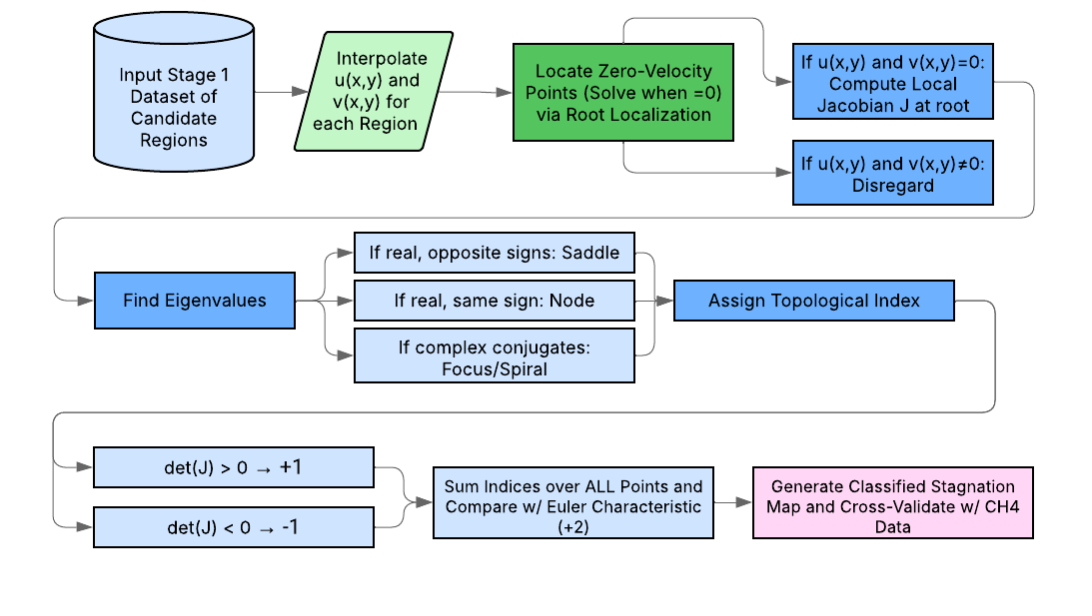
TopoFlow is a computational topology framework that applies the Poincaré-Hopf theorem and Hairy Ball Theorem to identify and classify atmospheric stagnation points from global wind fields. By combining sub-grid root-finding algorithms with high-resolution ERA5 reanalysis and Sentinel-5P methane observations, it reveals persistent flow structures that suppress atmospheric transport and drive methane accumulation. The framework validates topological conservation in real atmospheric data, quantifies the relationship between stagnation dynamics and greenhouse gas hotspots, and provides a novel mathematical approach to atmospheric transport analysis. Because the methodology depends only on the topology of flow on a spherical manifold, it naturally extends to the study of planetary atmospheres beyond Earth.

↓ RESEARCH ABSTRACT · PDF
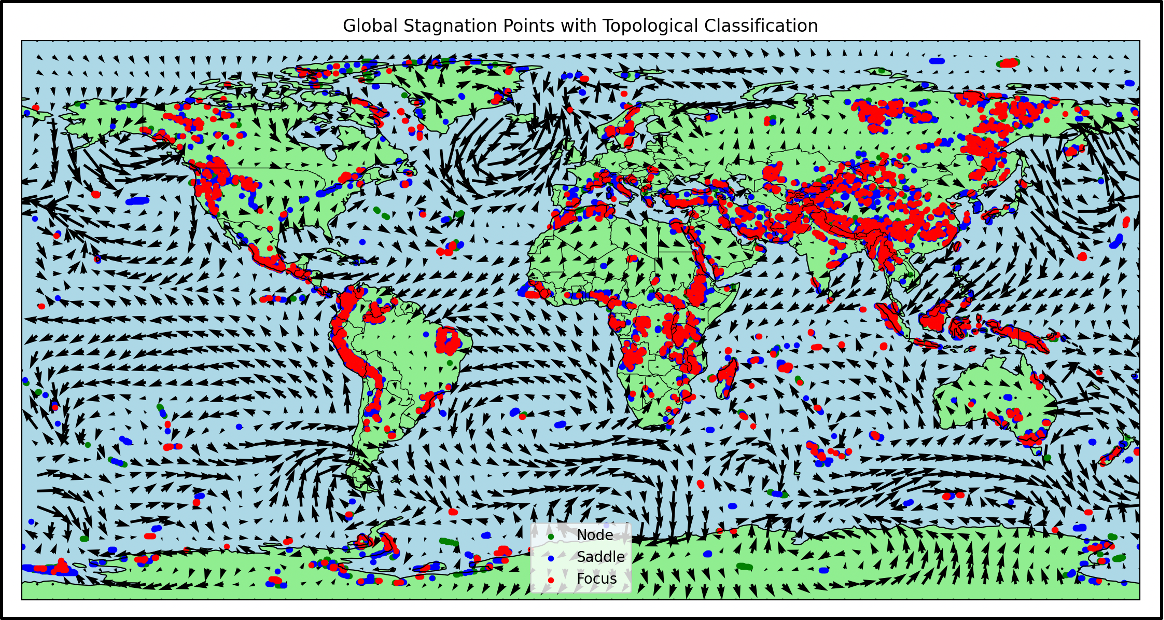
Global stagnation points with topological classification
Fig. 1. Classified stagnation vectors.
Topological classification pipeline diagram
Fig. 2. Classification pipeline.
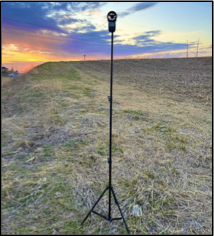
Field sensor deployed at dusk
Fig. 3. Field campaign anemometer data.
SYSTEM 02 · [QUANTUM ML × CLIMATE FORECASTING] · JANUARY 2025

SPECO

Engineered a quantum-enhanced atmospheric intelligence platform that couples spatiotemporal methane forecasting with sonophotoelectrochemical oxidation to identify emission hotspots and transform methane into renewable energy products.

{{ sign1 }}

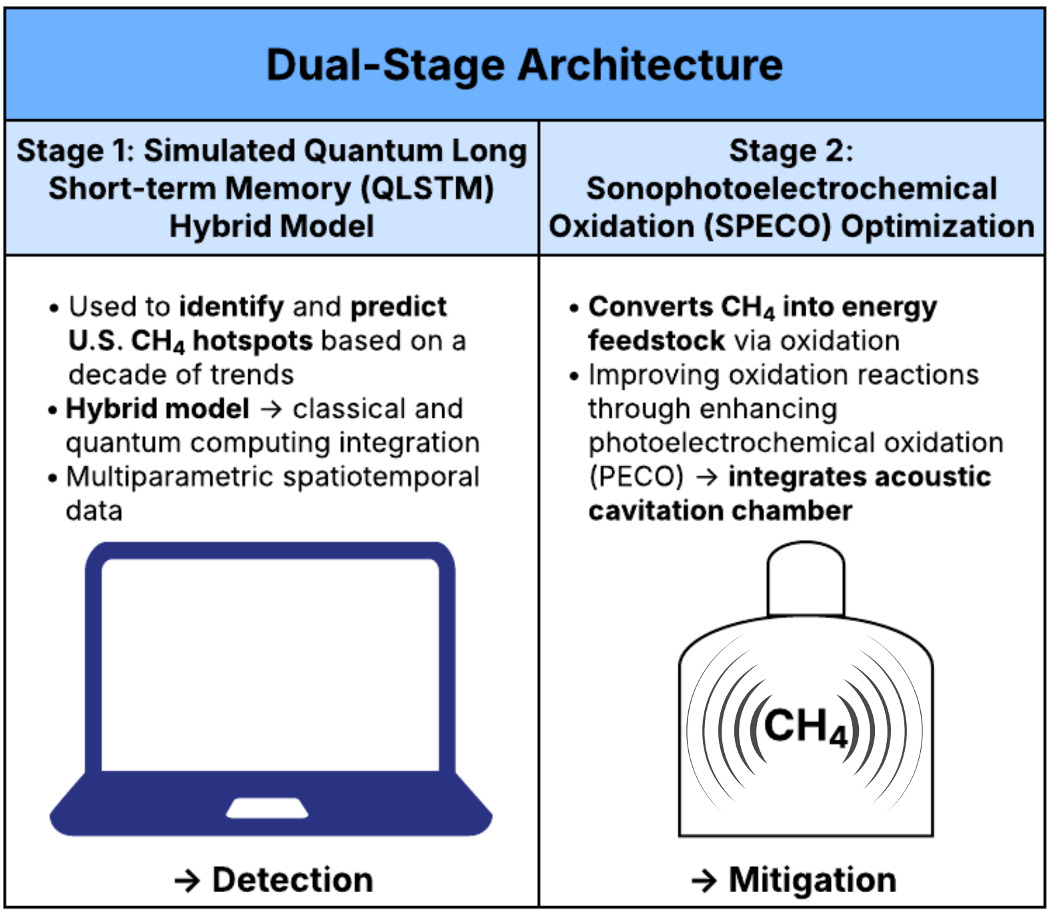
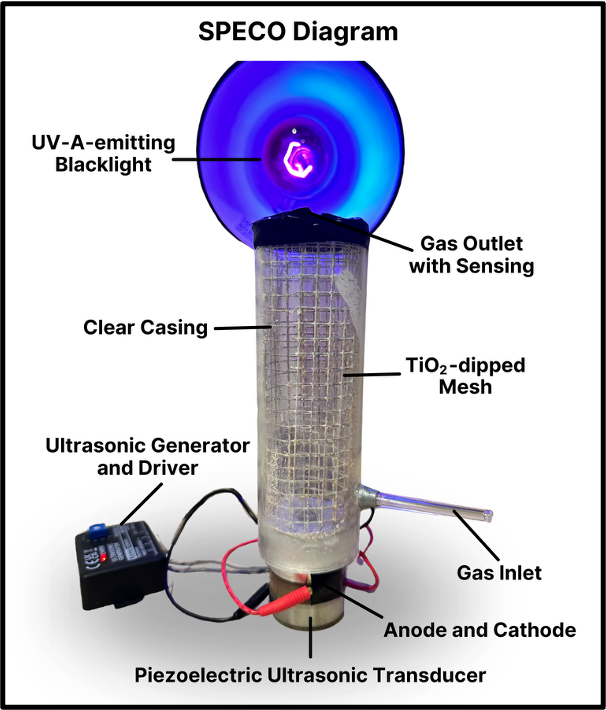
SPECO is a dual-stage methane forecasting and mitigation platform that combines quantum ML with advanced catalytic oxidation. The system employs a hybrid Quantum Long Short-Term Memory (QLSTM) neural network trained on multi-source satellite, atmospheric, and emissions datasets to predict methane hotspot formation with significantly improved accuracy over classical deep learning models. These forecasts are coupled with a sonophotoelectrochemical oxidation (SPECO) reactor, optimized through computational fluid dynamics, molecular dynamics, and vibroacoustic simulations, to enhance methane oxidation via ultrasonic cavitation. Together, the computational and experimental framework enables both proactive methane monitoring and catalytic conversion of atmospheric methane into energy feedstocks.

↓ RESEARCH PAPER · PDF
PUBLISHED · HARVARD RESEARCH JOURNAL
PRESENTED · AMERICAN METEOROLOGICAL SOCIETY
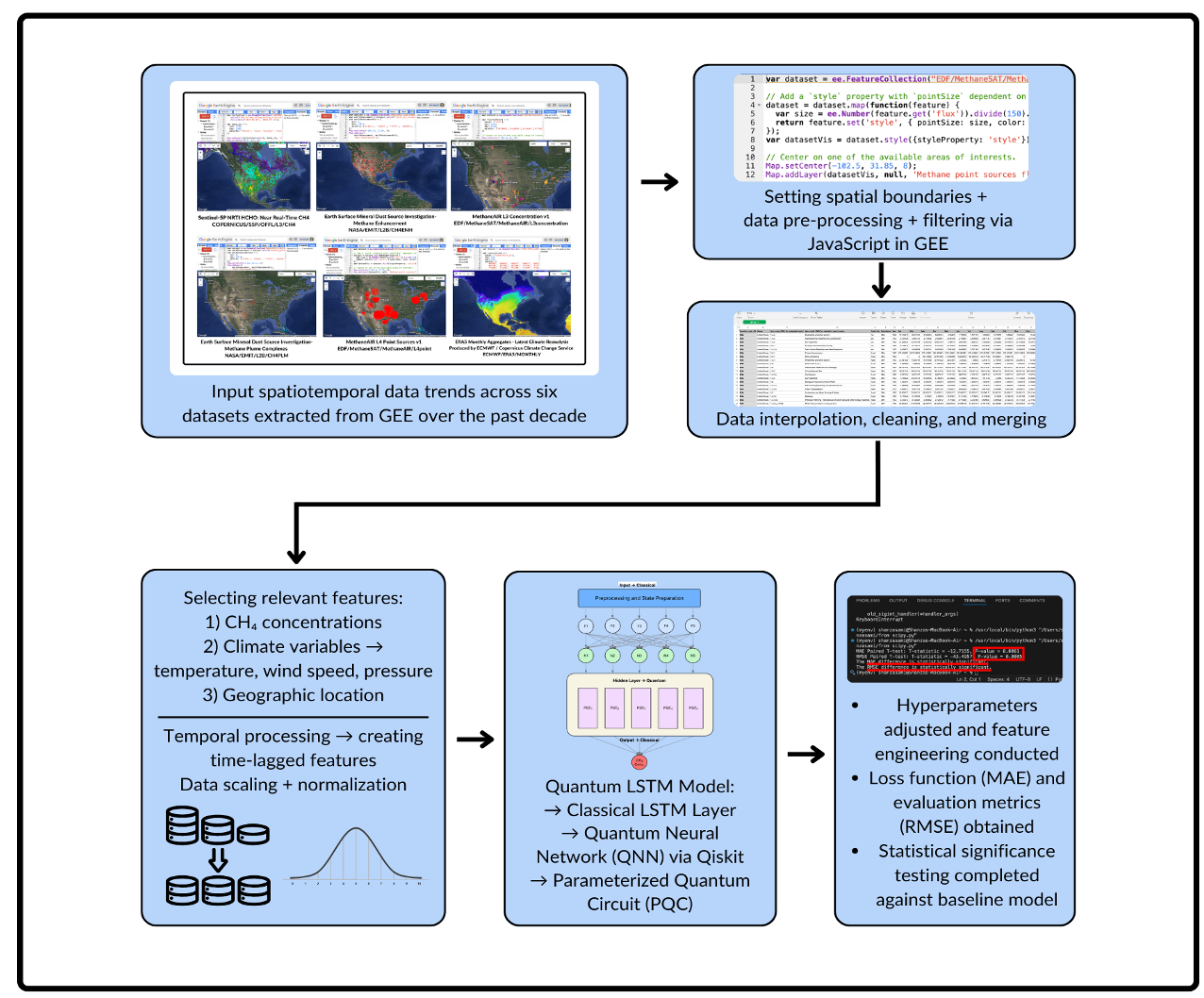
QLSTM data and modeling pipeline
Fig. 1. QLSTM pipeline.
Dual-stage architecture: detection and mitigation
Fig. 2. SPECO dual-stage architecture.
SPECO reactor diagram with labeled components
Fig. 3. Photocatalytic reactor.
SYSTEM 03 · [AIR QUALITY × COMPUTATIONAL OPTIMIZATION] · JULY 2022

Pura Aerem

Developed a computationally-optimized, multi-stage catalytic emissions system that integrates nanomaterial engineering, photoelectrochemical oxidation, and multiphysics simulation to reduce particulate matter, carbon monoxide, and carbon dioxide emissions from internal combustion engines.

{{ sign2 }}

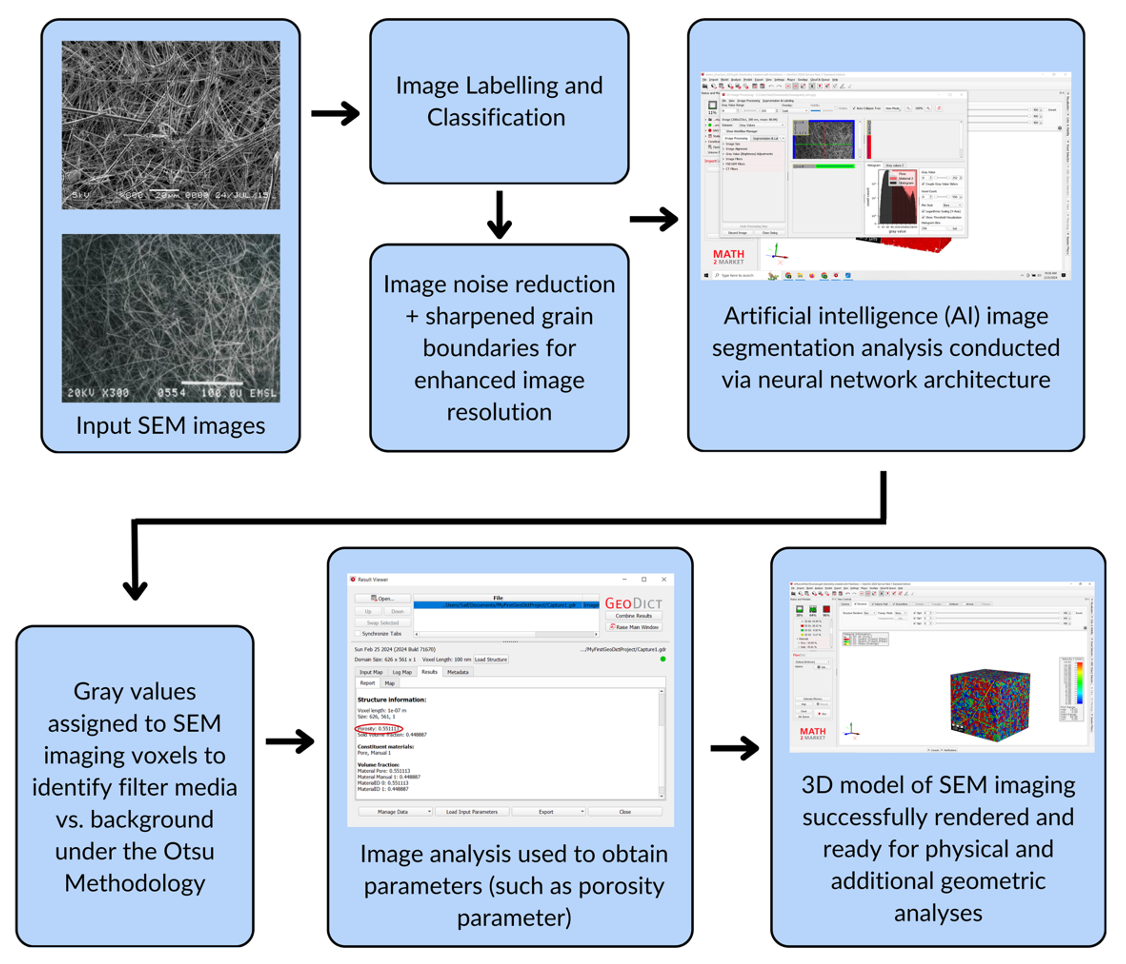
Pura Aerem is a modular, multi-stage extension to standard three-way catalytic converters designed to enhance the removal of particulate matter and greenhouse gas emissions from internal combustion engines. The system combines diffusion-interception particulate capture, photoelectrochemical oxidation for carbon monoxide degradation, and C60 buckminsterfullerene nanomaterial for carbon dioxide encapsulation, with each stage optimized through molecular dynamics, computational fluid dynamics, and AI image segmentation analysis of scanning electron microscopy data. Computational modeling informed the design of a manufacturable 3D-printed prototype, enabling optimization of airflow, filtration efficiency, and structural performance before physical validation. Experimental testing demonstrated near-complete removal of particulate matter and carbon monoxide alongside substantial carbon dioxide reduction, highlighting the potential of computationally engineered emissions control technologies to improve air quality.

↓ RESEARCH ABSTRACT · PDF
PRESENTED · NASA iA CONFERENCE
PRESENTED · 3M
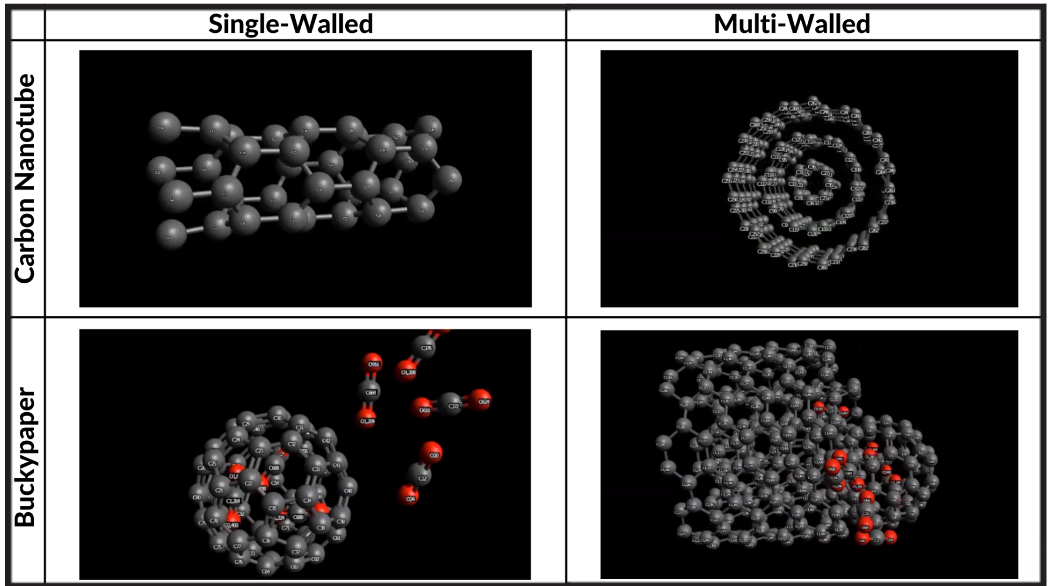
Carbon nanotube and buckypaper molecular structures, single- and multi-walled
Fig. 1. Molecular dynamics simulations of carbon nanostructures.
AI SEM image segmentation and 3D modeling pipeline
Fig. 2. Computational analysis and rendering pipeline. 
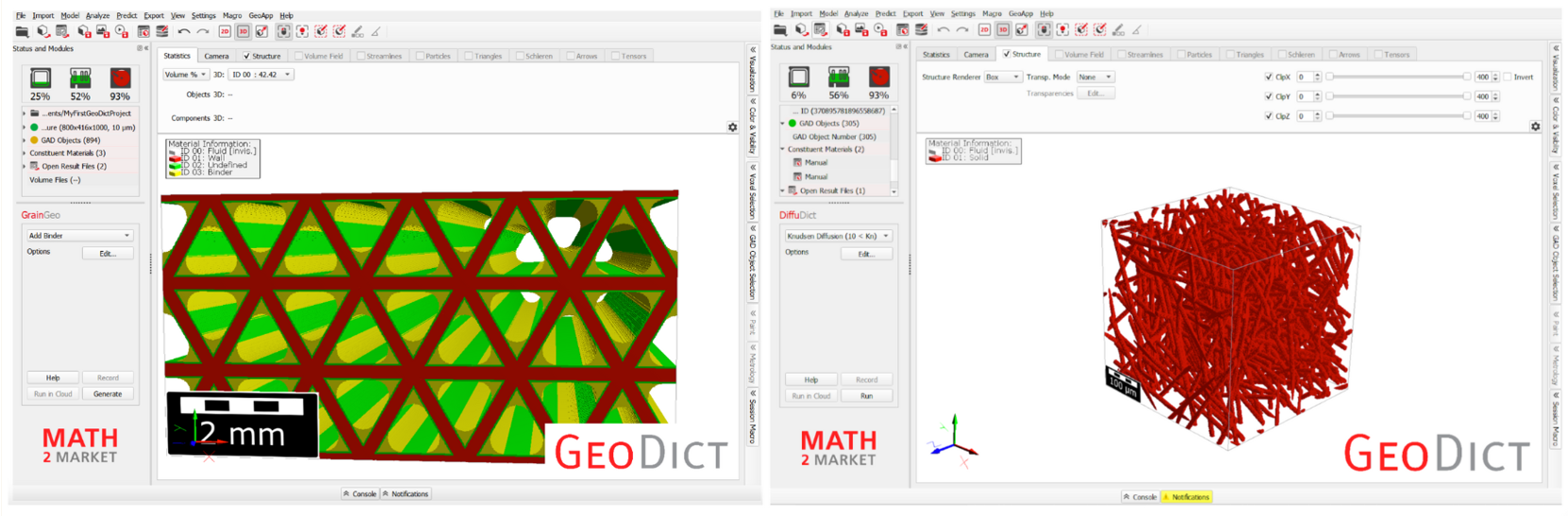
GeoDict simulations of filter lattice and fiber structure
Fig. 3. GeoDict-licensed computational fluid dynamics simulations.
SYSTEM 04 · [FOOD MARKET × INTERACTIVE APP] · MAY 2026

Chia

Designing the social app for curious grocery eaters. Chia is a taste-matching platform where food obsessives rank local products, build lists, and discover what they'll love based on whose taste matches theirs.

{{ sign3 }}
Finding food worth buying is broken. Cult grocery drops, viral snacks, and standout local vendors live scattered across TikTok and Reddit with no trusted rankings or way to discover what's actually good. Chia is Letterboxd for groceries: a taste-matching platform where food enthusiasts rank products, build "want to try" lists, and get recommendations based on whose taste matches theirs. We combine national novelty products (TJ's drops, Costco finds) with local vendors (farmers markets, CSAs), gamified with leaderboards and friend taste-matching.

Our insight: local-food apps fail because any town lacks user density. We use the viral national layer as the growth engine to build the local density that makes vendor discovery work. Target: grocery obsessives and Gen Z foodies, ages 18-45. Revenue: CPG brand partnerships and taste data. We compete against scattered creators (TikTok, Reddit, Localize Food) and leverage niche techniques (Yuka, Beli) — but no one has unified the mechanic.
SYSTEM 05 · [STEM EDUCATION × COMMUNITY ENGAGEMENT] · JUNE 2023

STEM for Youth

Founded STEM for Youth, a nonprofit that develops and delivers scalable, hands-on STEM education programs in partnership with schools, libraries, and community organizations to expand access to science and technology education.
{{ sign4 }}
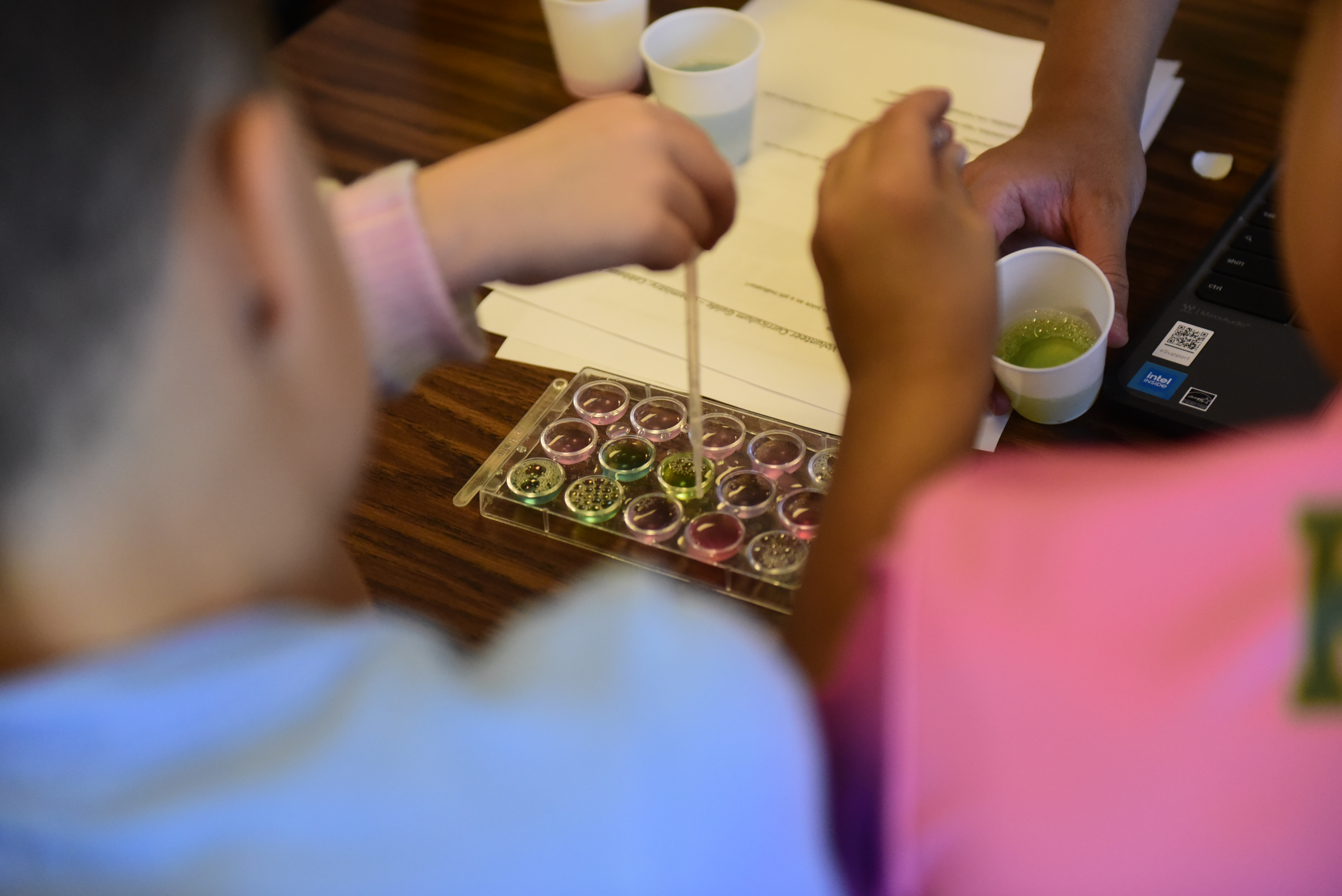
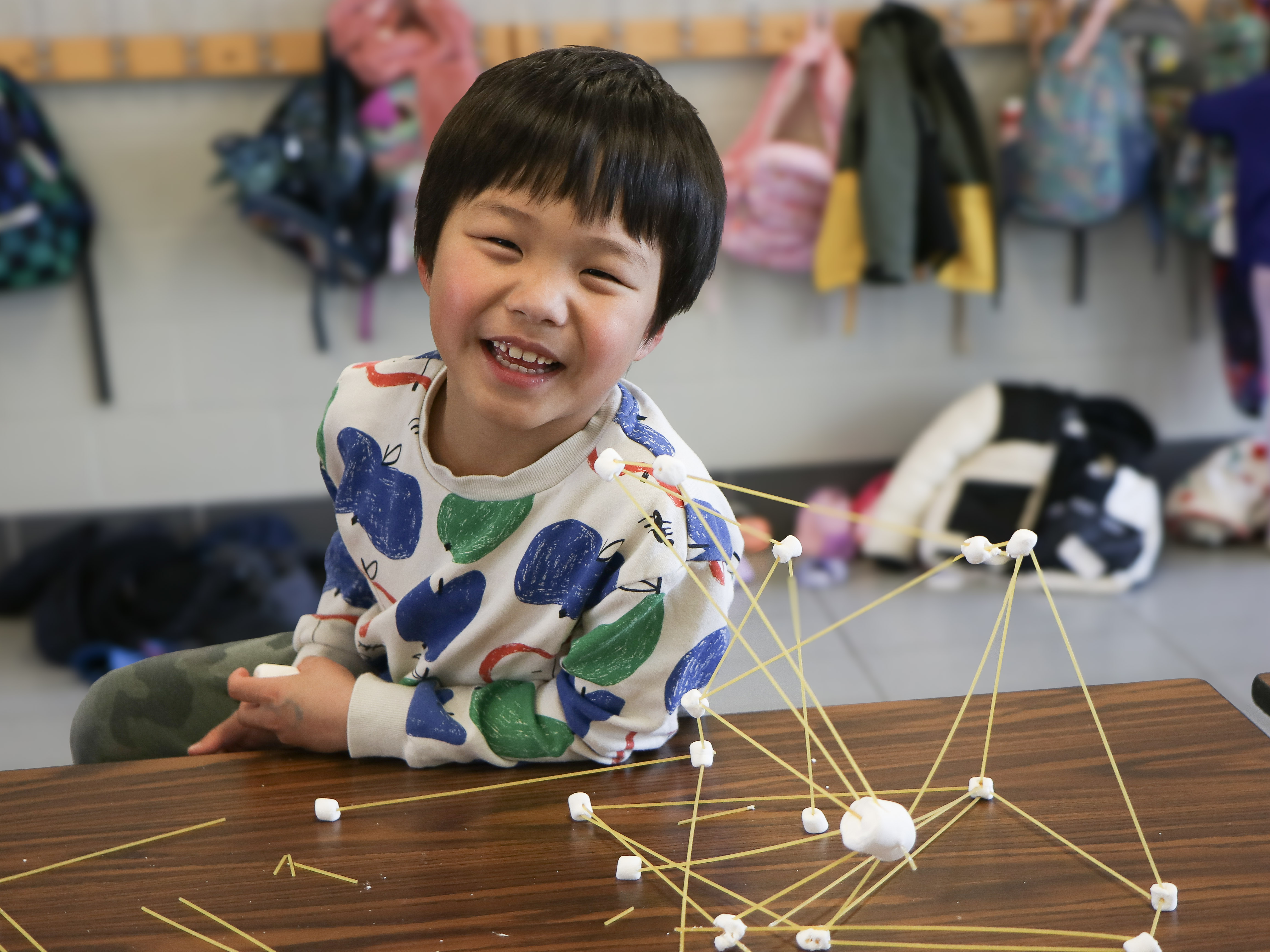
STEM for Youth impacted 800+ students across Iowa with ~100 teen volunteers. Overall, the organization has spearheaded 15 science expos and programs, with partnerships across 5 organizations. With 120,000+ social media impressions, STEM for Youth is currently advancing rural STEM access and digitalizing education to be engaging. 
RECIPIENT · 2025 INSPIRING PROGRAMS IN STEM NATIONAL AWARD
Students pipetting colorful solutions during a chemistry workshop
Fig. 1.  pH indicators chemistry workshop.
Young student smiling beside a spaghetti-and-marshmallow structure
Fig. 2. Structural engineering tower challenge.
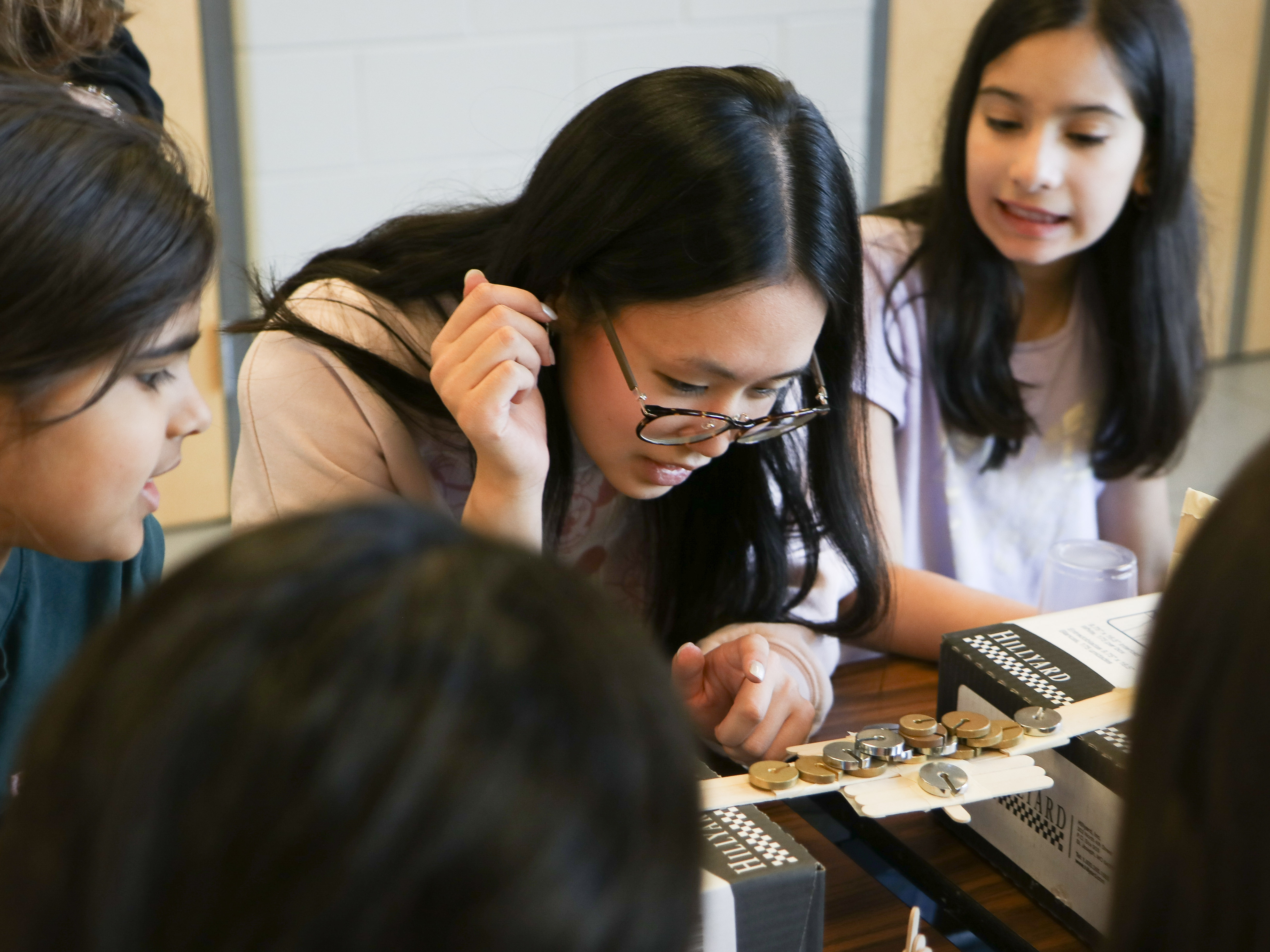
Students load-testing a popsicle-stick bridge together
Fig. 3. Volunteer testing load-bearing bridge.
SYSTEM 06 · ONGOING

Future Ventures

I'm interested in building planetary intelligence — developing technologies that can model, optimize, and ultimately operationalize Earth's atmospheric and energy systems, while laying the foundations for resilient civilizations beyond our planet.

{{ sign5 }}
Earth is humanity's first laboratory for planetary engineering. I'm interested in developing technologies that transform our ability to model, optimize, and operationalize complex atmospheric and energy systems — not only to strengthen life on Earth, but to establish the scientific foundations for resilient civilizations beyond it. I'm fascinated by questions surrounding orbital energy infrastructure, space-based computation, autonomous planetary habitats, and the scientific foundations that could one day make terraforming or sustaining human life on other worlds possible.

The questions that drive me are: How do we transform Earth into a more resilient planet? How can space-based infrastructure (such as orbital solar power or extraterrestrial AI compute) reshape civilization? And what technologies must humanity develop before responsibly engineering environments beyond Earth becomes possible?
04 AWARDS

Awards: milestones in orbit.

Click the orbit's name to travel into that chapter.

CURIOSITY
{{ b.name }}
{{ b.meta }}
{{ b.desc }}

Awards and recognition are not endpoints. They are positions along an orbit that constantly stay in motion. 

SELECT AN ORBIT TO TRACE ITS CHRONOLOGY

{{ chapTitle }}

{{ a.y }}
{{ a.t }}
{{ a.o }}
{{ a.d }}
RESUME · PDF
LINKEDIN ↗
05 PRESS · THE FOLIO

Press: notable folios.

Press Archive
EX LIBRIS · SHANZA SAMI
END OF ARCHIVE
WEST SIDE STORY 2025
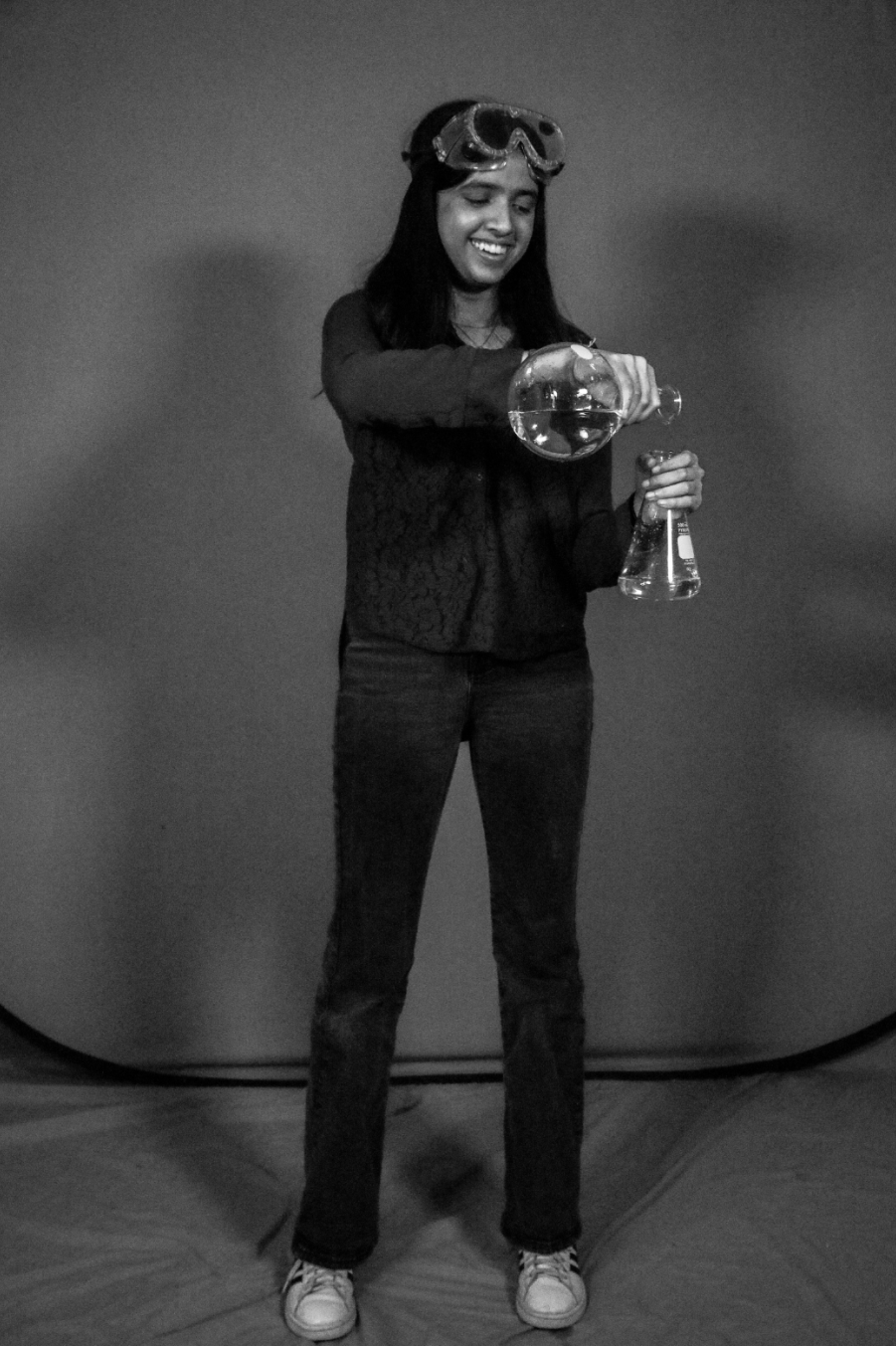
“WSS 2025 People of the Year: Shanza Sami”
Shanza pouring between flasks, goggles on, in a studio portrait

Voted for her commitment to academic excellence and lasting impact — founder of STEM for Youth, international science fair competitor for West High, and a Free Spirit conference honoree for journalism.

“My interest in science research has really taken off, and I’ve created new projects and inventions that have fueled my passion in science, but also other subjects too.” — Shanza Sami
FOL. 4r
№ 4
WEST SIDE STORY
CLICK TO TURN BACK
CBS2 IOWA IOWA CITY, IA
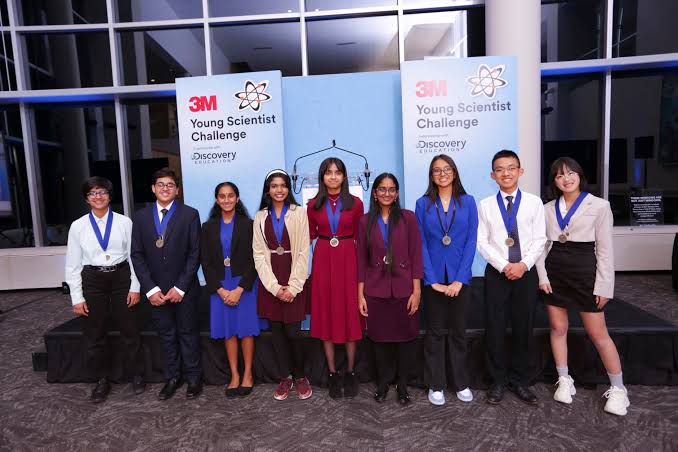
“Iowa City student named finalist in national science competition: 3M Young Scientist Challenge”
Shanza with fellow 3M Young Scientist Challenge finalists

Shanza developed an extension to catalytic converters to improve air quality and the content of gases released by vehicles. Through a summer mentorship, she will partner with a 3M scientist to turn her concept into reality — competing at the final event Oct. 17–18.

FOL. 3r
№ 3
CBS2 IOWA
CLICK TO TURN BACK
IOWA CITY PRESS-CITIZEN JULY 2022
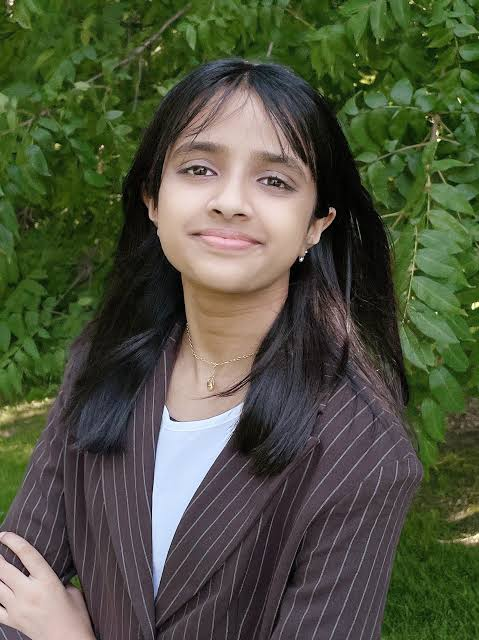
“This Iowa City teen has a plan to reduce car emissions. She’s a finalist in a national science competition”
Portrait of Shanza Sami

Even as an elementary school student growing up in Iowa City, Shanza Sami’s mind was always buzzing. Now at age 14, Sami is creating an extension to a catalytic converter that could combat climate change and air pollution.

“Shanza selected something she was passionate about; something that was going to make a difference to our environment by cleaning the air quality.” — Jodie Eilers
FOL. 2r
№ 2
IOWA CITY PRESS-CITIZEN
CLICK TO TURN BACK
THE GAZETTE CEDAR RAPIDS, IA
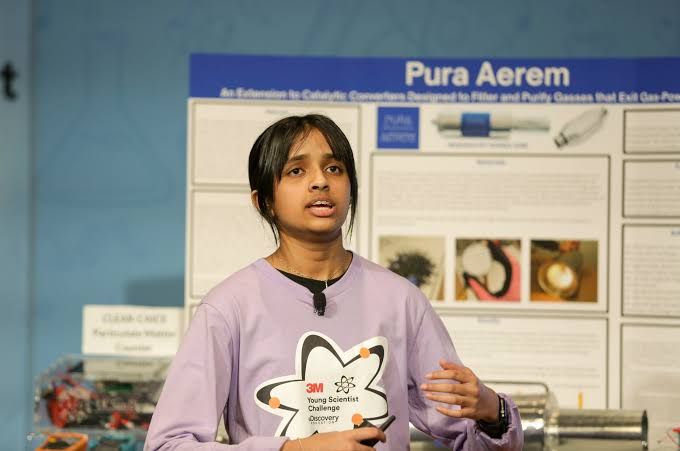
“Iowa City student recognized by young scientist competition for pollution-reducing invention”
Shanza presenting Pura Aerem at the 3M Young Scientist Challenge

Prototype could be a stopgap solution to fight climate change.

“[I learned] not to be discouraged by failure, because it’s essential to lead to success. Encountering adversity and obstacles was essential to growth.”
FOL. 1r
№ 1
THE GAZETTE
CLICK TO TURN BACK
{{ pressLabel }}
FULL PRESS ARCHIVE · LINKTREE ↗
06 RESOURCES · THE OBSERVATORY LIBRARY

Library: seven drawers of stuff that shaped my thinking.

Open a drawer, or search the whole archive. Each entry carries a note in the margin.

SEARCH VII DRAWERS
{{ it.t }}
{{ it.t }}
{{ it.a }}

NOTHING IN THE ARCHIVE MATCHES — YET.

07 CONTACT · EARTH AT NIGHT

Let's connect! 

The future is built through conversations.

BEGIN A CONVERSATION
SHANZA SAMI · PERSONAL OBSERVATORY